Five tips for successful moose hunting
In collaboration with Prise du Jour
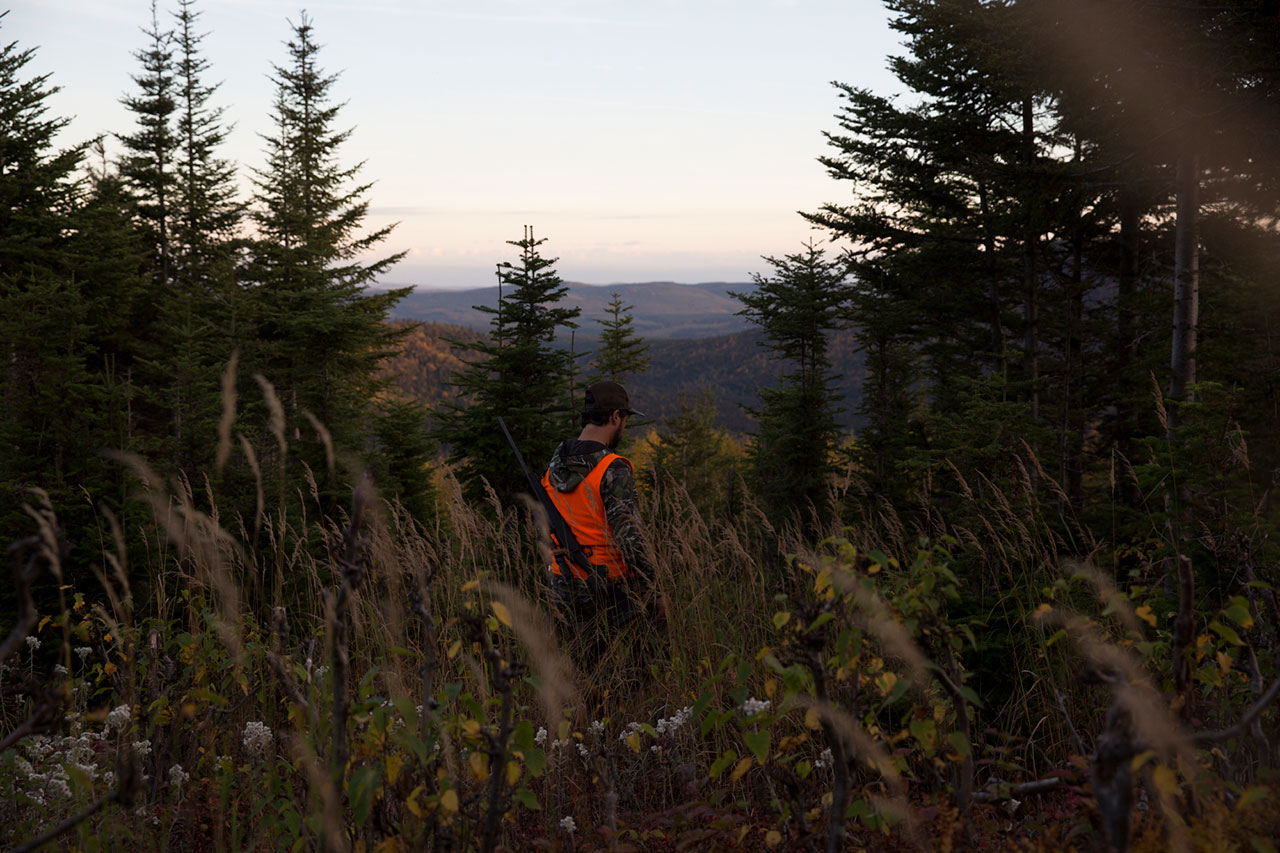
With hunting season in full swing, we asked Philippe April-LeQuéré from Prise du Jour to share his best tips for hunting big game. Here are five practical tips drawn directly from his experience in the field, including his most recent outing in Réserve faunique des Laurentides.
These simple and effective recommendations are designed for hunters who want to maximize their chances of success by adapting to the realities of the woods and the unpredictable behaviour of moose.
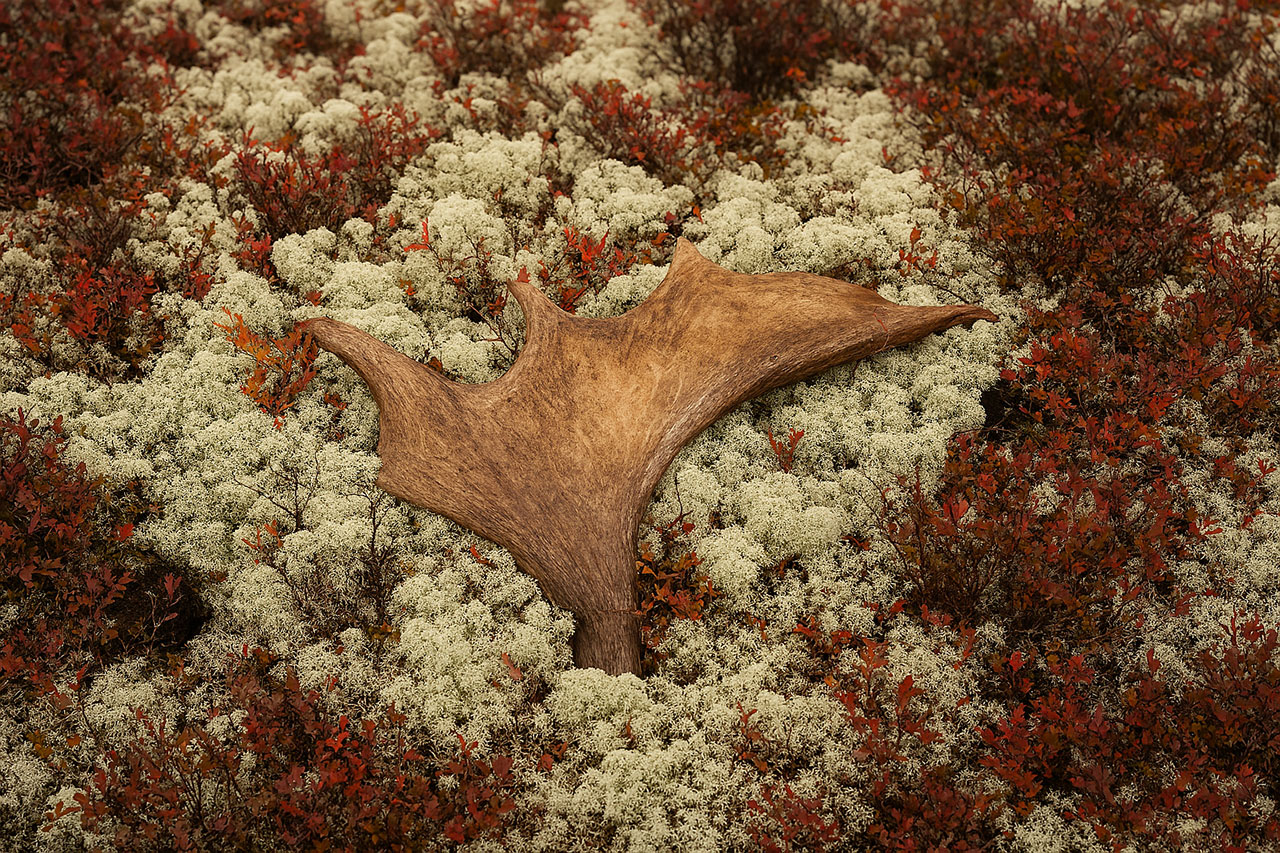
Planning your hunt with available maps
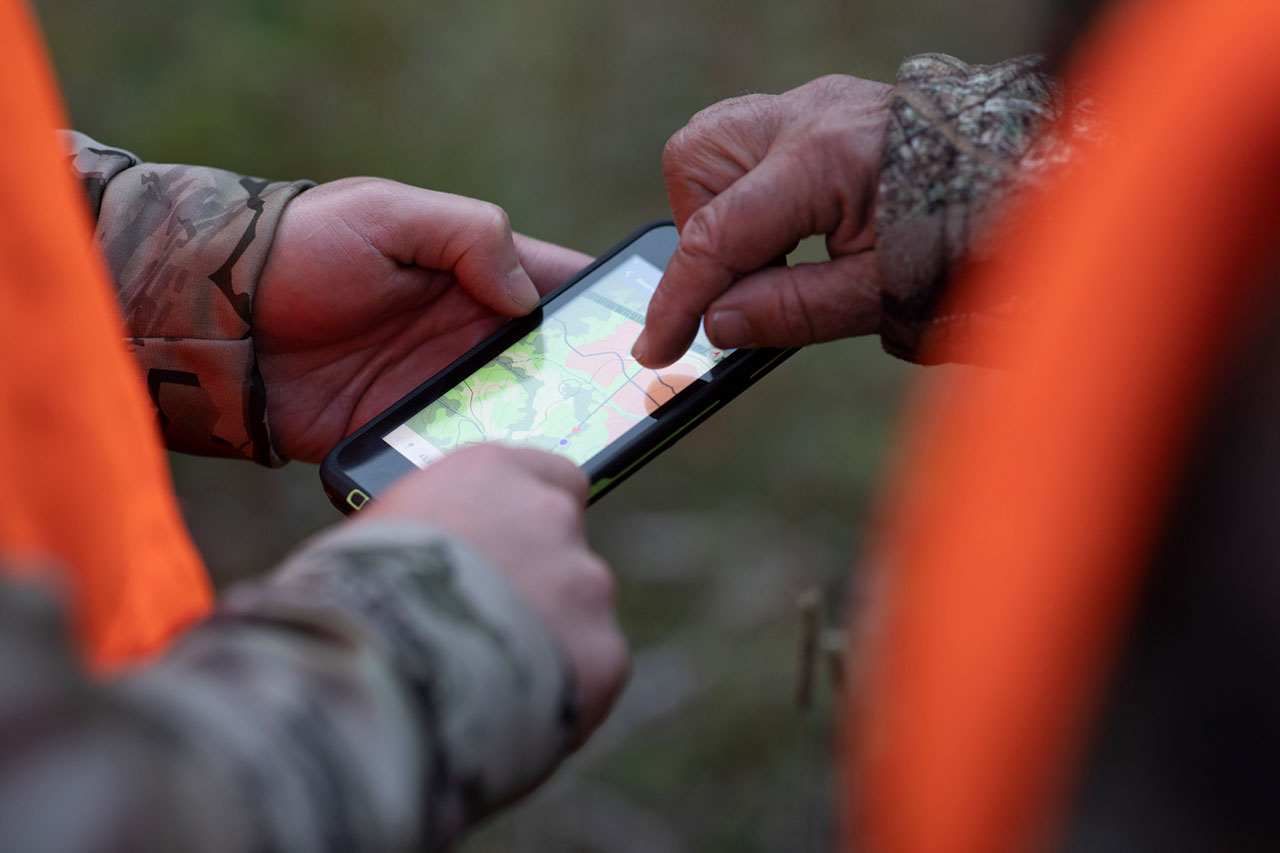
Tools such as Avenza Maps or Forêt ouverte can be used to identify promising zones before you set out. Satellite imagery, topographic lines, and ecoforestry codes can help you identify zones where moose are most likely to be found.
A good map analysis only takes a few minutes, but can save you hours of fruitless hunting in the wrong sectors. Personally, I look for two types of environments:
- Feeding zones near resting zones
- Cool zones, which are particularly useful during hot weather
On Avenza Maps, recent forest clearings (0 to 10 years old) are clearly identified. These environments offer a good balance between food accessibility for moose and visibility for hunters—ideal for the early and late hours of the day. In the middle of the day, I head to nearby mature coniferous forests.
Forêt ouverte allows for even more in-depth analysis. Under the "forest" map theme, you can view ecoforest stands. The ecoforest code provides valuable information: for example, a code beginning with SB indicate a predominance of balsam fir. A canopy cover of 65% means that enough light penetrates to allow hardwoods to grow in the understory. A height of 18 m indicates a mature stand, and therefore a good habitat for moose.
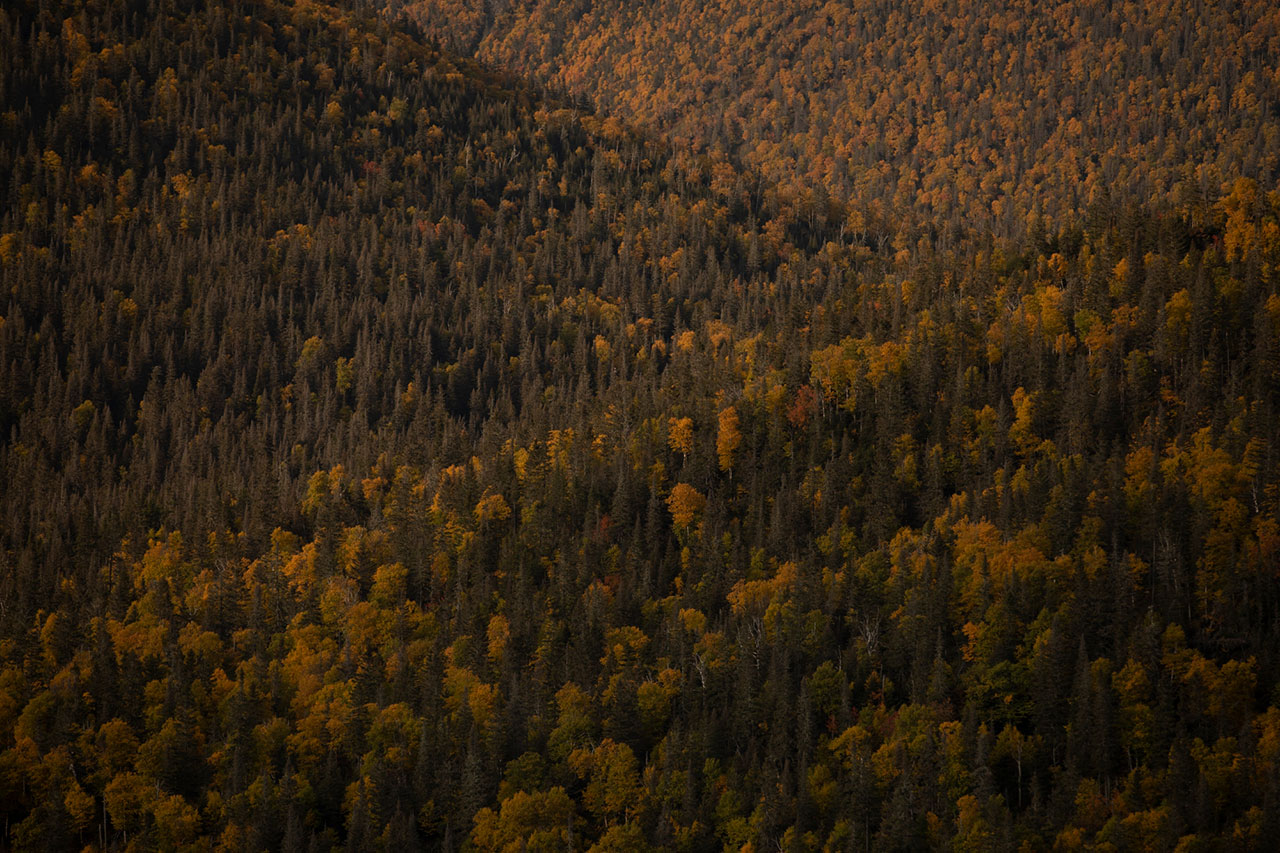
Cool zones are particularly sought after when temperatures exceed 20°C. These environments are often found near stream heads, in flooded zones, swamps, or cedar forests. The topographic maps and waterways visible on Avenza Maps are valuable allies in locating them.
Finally, you can call on a moose hunting expert for a personalized analysis of your territory. This service can offer an experienced perspective on the best zones to target depending on the conditions and time of season. Honestly, it's a valuable resource for both novice and experienced hunters alike.
Adapting your hunting plan to the weather
On hunting day, weather conditions guide my choice of zones to target and, more importantly, how to approach them. Wind, in particular, is the element that most often betrays hunters. An unfavorable wind alerts moose to our presence, ruining any approach.
That's why, at the start of the day, I plan my movements upwind, based on the zones I have previously identified. Depending on the topography and natural obstacles, some zones become inaccessible even when the wind is right. So you have to adapt your strategy in real time.
The temperature also influences the choice of sectors. On hot days, I prefer cooler zones, identified using maps and field observations. In colder periods, moose tend to concentrate more in zones where they can find food and shelter.
Every decision is guided by a careful reading of the terrain and the conditions of the day. It is this constant adaptation that makes the difference between an ordinary hunt and a successful one.
Staying aware of the wind
Even after checking the forecast, once you're in the forest, the wind can behave very differently. A mountain, a gap in a mature forest, or a simple change in temperature can completely change its direction... Ah, the joys of hunting!
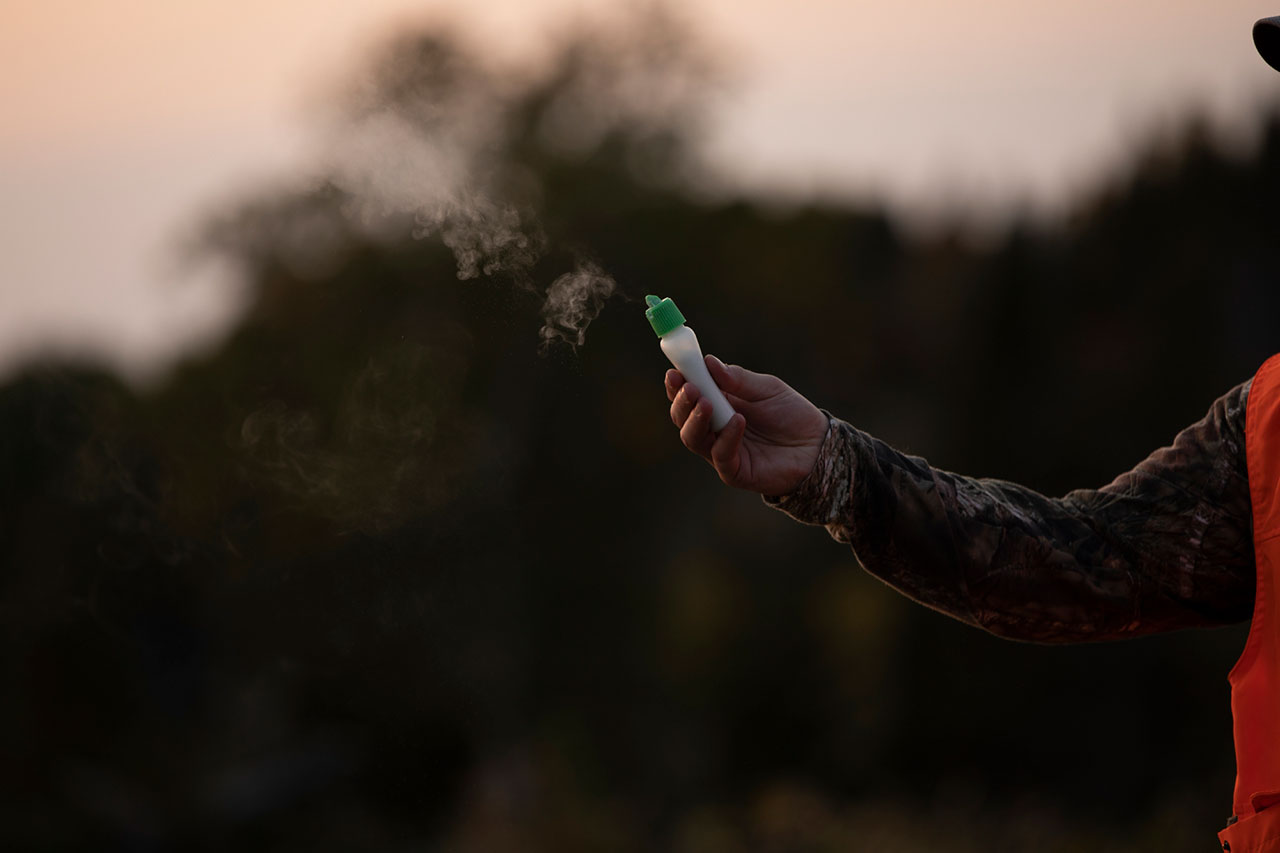
When I'm on the move, I constantly pay attention to the wind. You can feel it on the back of your neck, but for greater accuracy, I use a small bottle of powder that is easily found in hunting stores. When released into the air, it instantly reveals the wind direction at my exact location. This information is crucial, especially when a moose tries to circle around us to pick up our scent after being challenged.
To optimize my movements, I combine this observation with the Avenza Maps app, which allows me to navigate efficiently toward the zones I want to target. A good reading of the wind, combined with a well-thought-out field strategy, can make all the difference between a missed encounter and a memorable harvest.
Becoming a moose in the woods
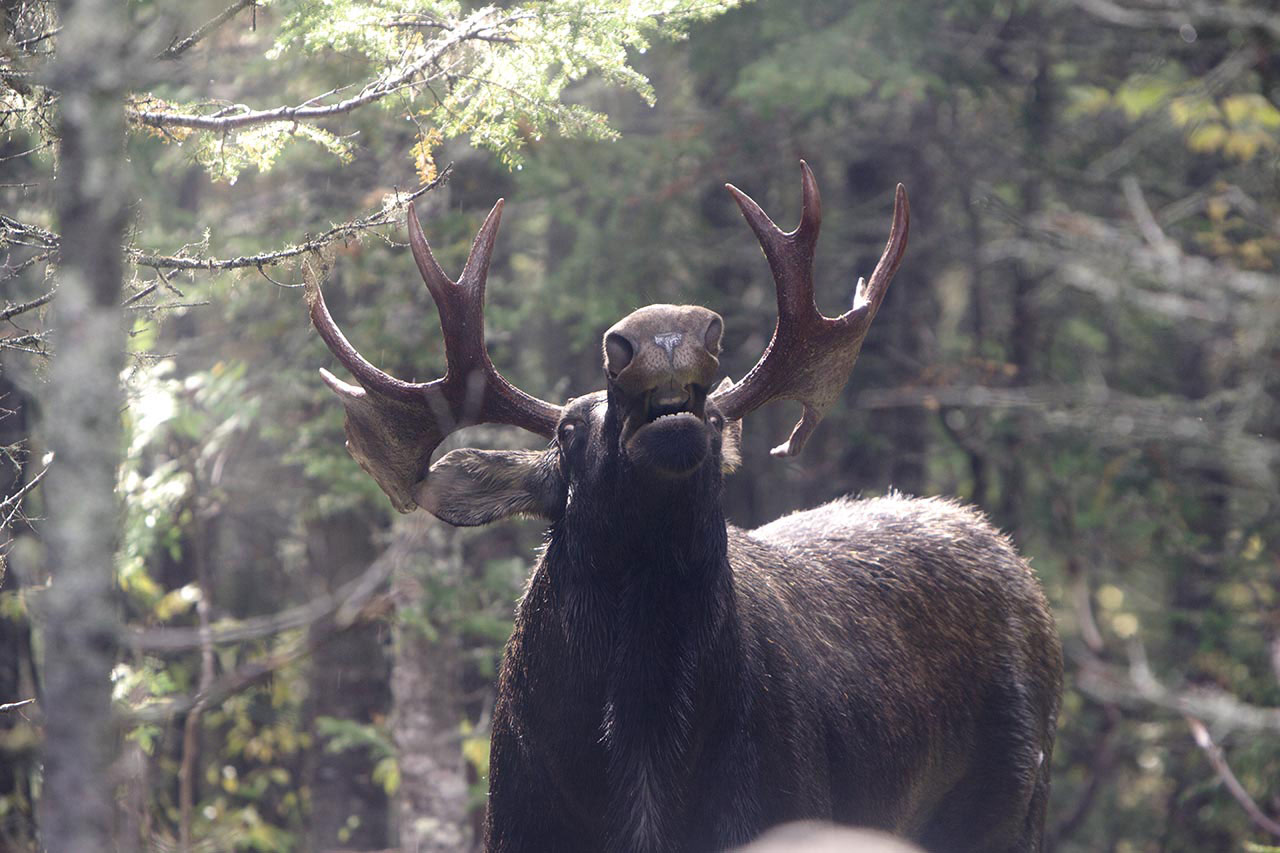
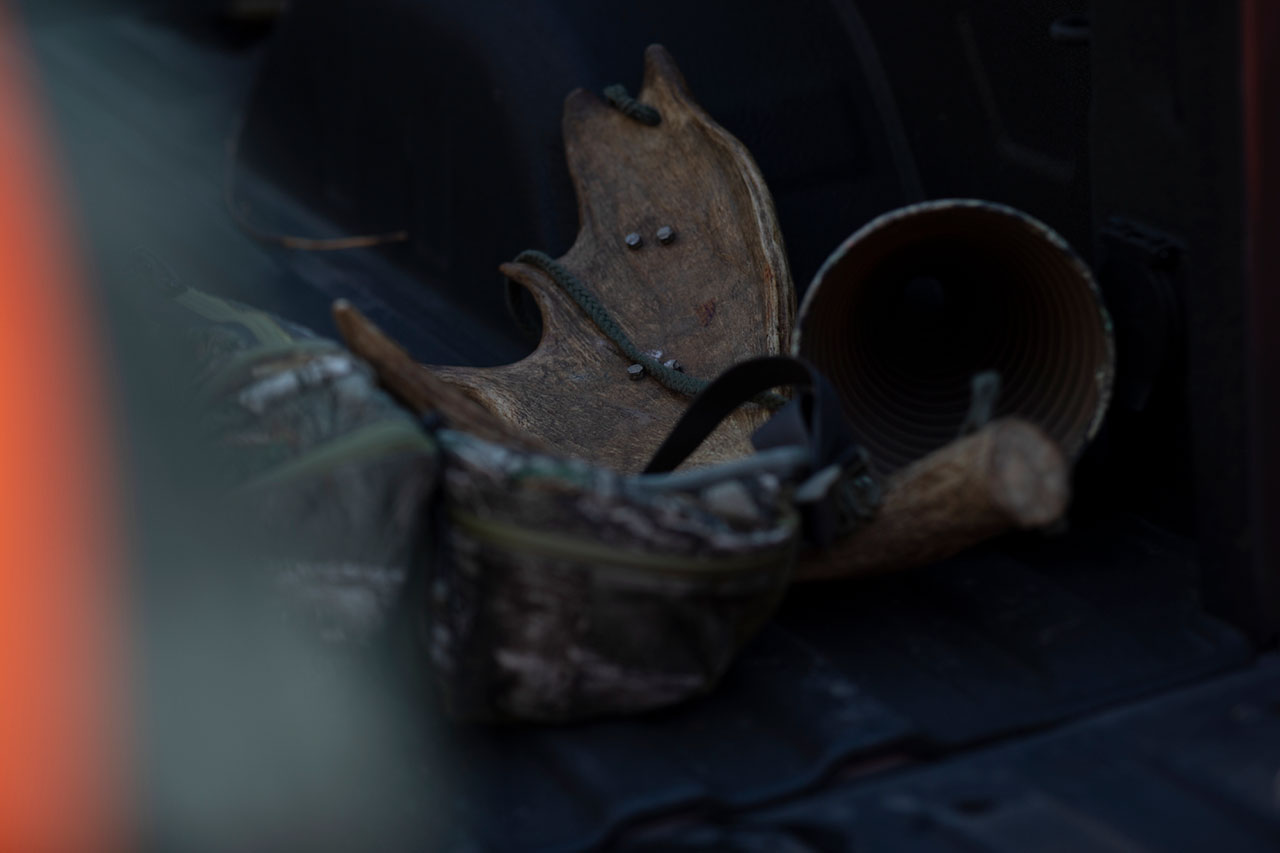
New approaches to moose hunting focus on movement and imitation. Rather than waiting passively, hunters move through the forest embodying a moose. This naturally curious big game creature will often come to investigate when it believes a fellow moose is entering its territory.
Calling before entering the forest is crucial. Even though, surprisingly, moose themselves are not always very skilled at communicating with each other, your ability to produce the right sound at the right time, and with confidence, can make all the difference.
To enhance realism, add movement sounds: break branches at shoulder height, tear leaves as a moose would, or rub a paddle against trees as you walk. These details enrich the illusion.
But the most underrated element is listening. Moose are extremely attentive to their surroundings. By slowing your pace and regularly taking 15 to 60 seconds to listen, you increase your chances of detecting a subtle response, sometimes from more than 100 metres away. A simple crack of a branch can be a sign that a moose is approaching.
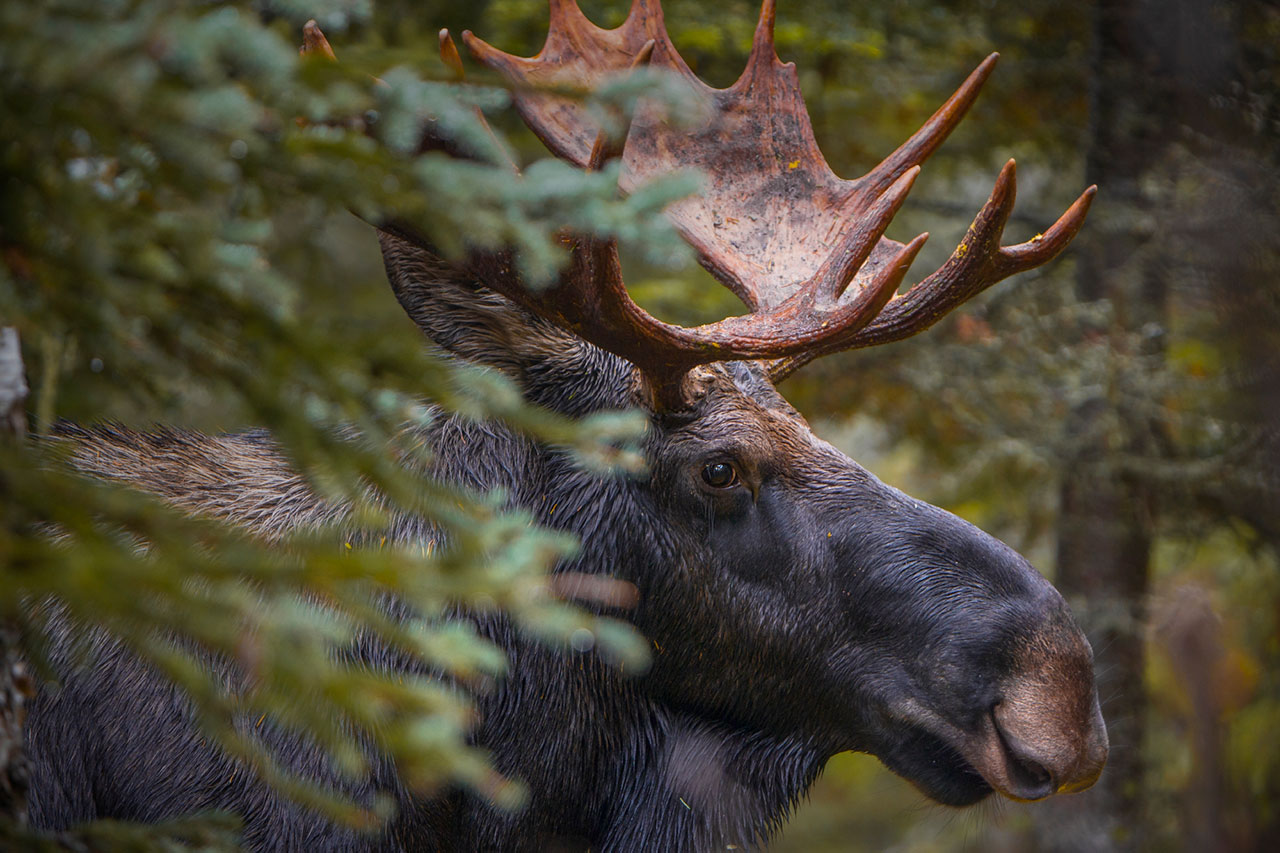
During my last outing, my hunting partner and I misinterpreted a subtle response. If we had been more attentive, we might have harvested a superb 45-inch antlered male... which would have been a delight!
Showing perseverance
Hunting is like a roller coaster. For several days, you wait patiently, much like standing in line without knowing when the carnival ride will start. Then, suddenly, everything can change: a moose responds, and the action begins.
As a hunter, it's essential to stay optimistic and maintain constant focus throughout your hunting trip. The game you're after often appears without warning, and each day spent in the field makes you more experienced. Even after missed opportunities or prolonged silence, you've gathered valuable information and refined your techniques.
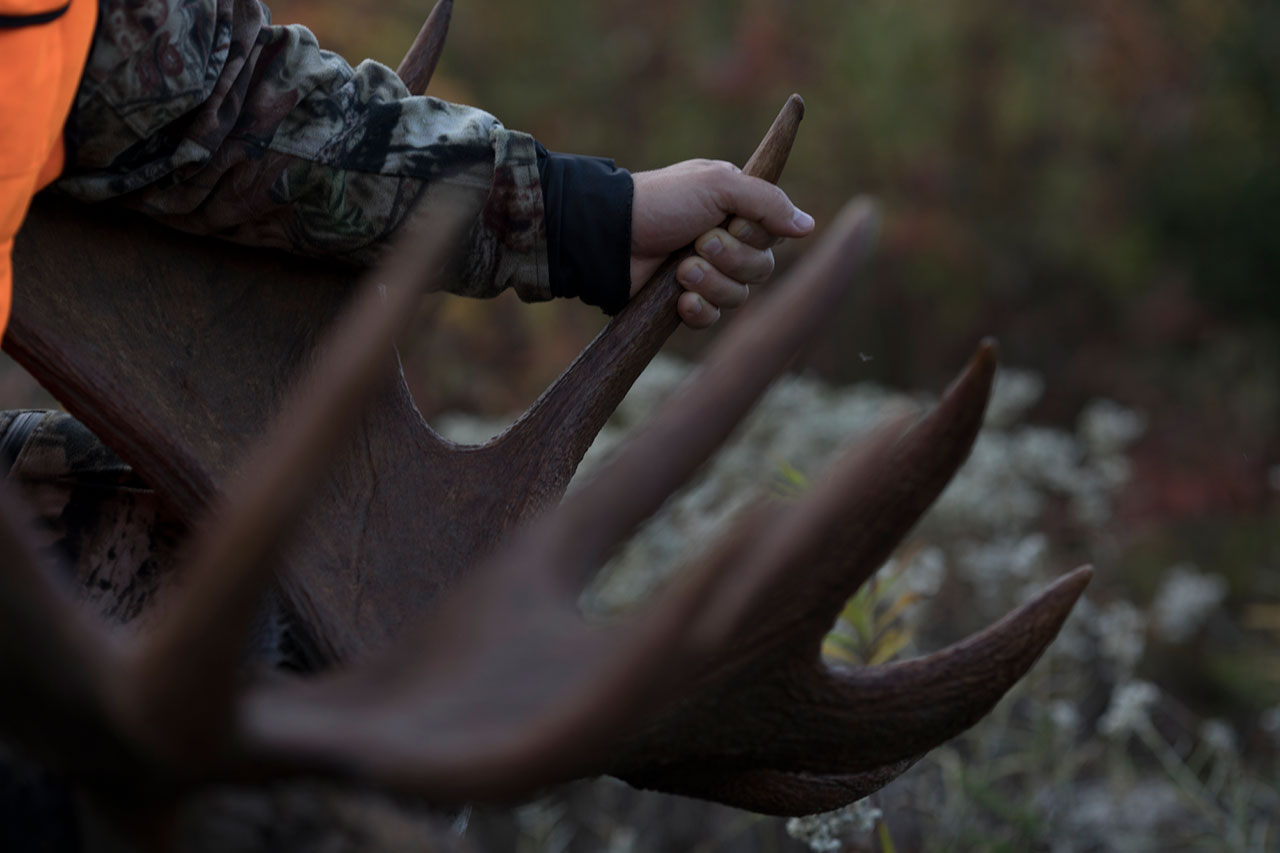
That's why you have to hunt with the same intensity on day five as on day one. Perseverance is often the key to success. Once again this year, it was on our very last full day that we made our kill. It just goes to show that in hunting, nothing is ever a foregone conclusion.